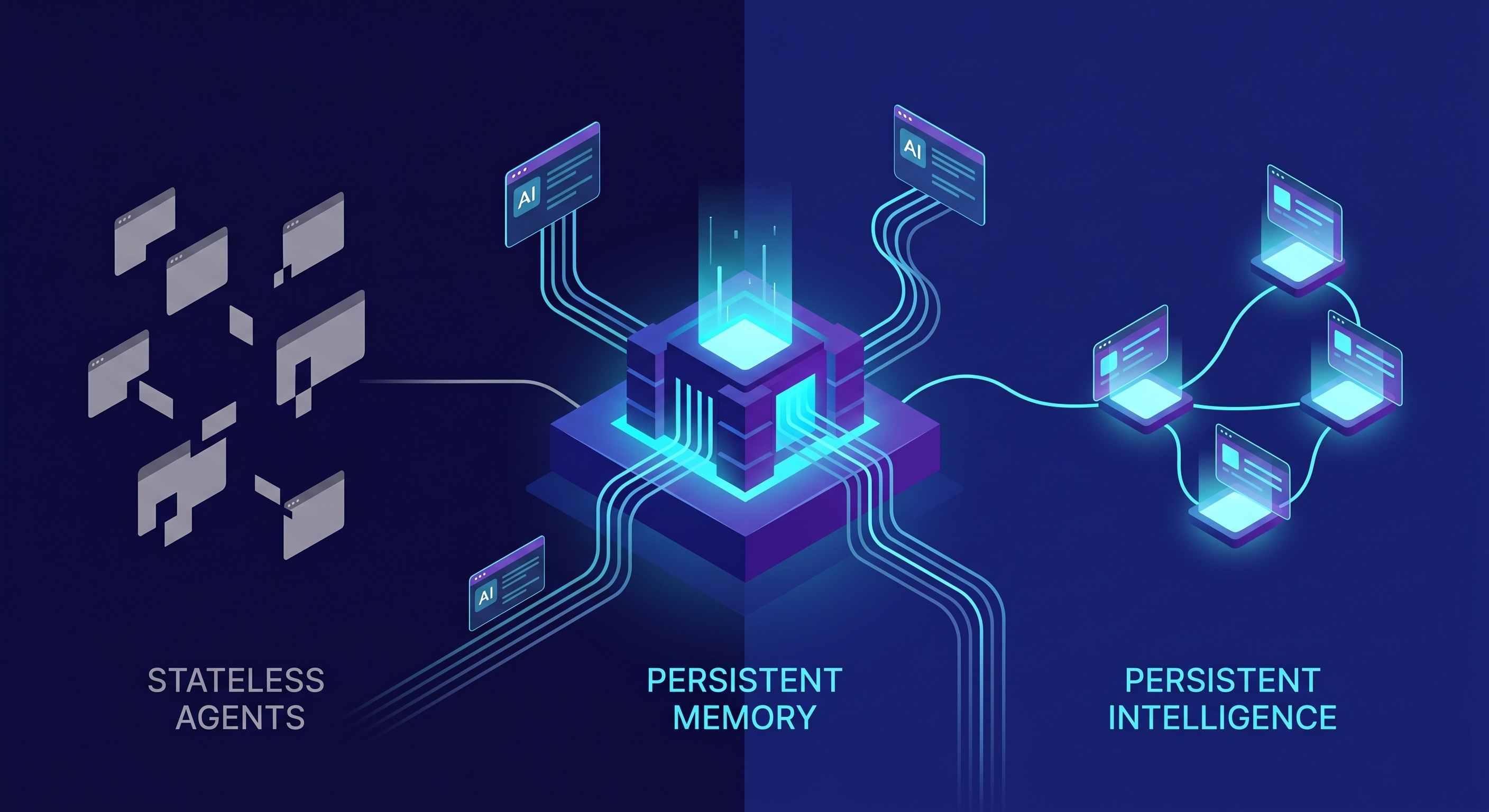
Artificial intelligence is moving at an extraordinary pace.
Every week brings a new model, a new agent, a new benchmark, or a new prediction about how AI will transform business. Organizations are evaluating platforms, testing copilots, experimenting with automation, and trying to determine how AI fits into their future.
The excitement is understandable.
But beneath the momentum, many companies are making a strategic mistake.
They are focusing on models when they should be focusing on intelligence.
That distinction may determine who benefits most from AI over the next decade.
This may be one of the most important strategic realities emerging in the AI era.
Models are becoming increasingly accessible. Organizations can switch providers, evaluate alternatives, and adopt new capabilities as they emerge.
Intelligence is different.
Intelligence is built over time through customer understanding, behavioral insight, historical context, identity continuity, decision frameworks, and organizational knowledge.
That is where durable advantage is created.
Much of the AI conversation revolves around questions like:
These questions dominate headlines, conference stages, and executive discussions.
They are also becoming less important.
The reality is that AI models are improving rapidly across the board. What appears to be a meaningful advantage today often becomes a commodity tomorrow.
The competitive advantage is rarely the model itself.
The competitive advantage is what the model knows, how it is applied, and the intelligence infrastructure that supports it.
Spend enough time in technology circles and it can feel like AI has already transformed the world.
But attention and adoption are not the same thing.
Many organizations are still:
The largest wave of enterprise adoption may still be ahead of us.
That is important because it means organizations still have time to make foundational decisions that will influence their long-term success.
The question is whether they are investing in assets that compound over time.

Every major technology shift eventually separates temporary advantages from durable ones.
AI will be no different.
Models will improve.
Interfaces will evolve.
Agents will become more capable.
New vendors will emerge.
Others will disappear.
What remains valuable throughout those changes is intelligence:
These capabilities become more valuable as AI adoption increases because they allow organizations to apply intelligence consistently across changing technologies.
While models are becoming increasingly interchangeable, intelligence infrastructure becomes increasingly strategic.

The organizations that benefit most from AI may not be the ones with access to the latest model.
They may be the ones that own the intelligence layer behind it.
As AI becomes embedded across marketing, customer engagement, analytics, operations, and decision support, organizations increasingly face questions such as:
These are not model questions.
They are intelligence questions.
And they are becoming more important every day.
Brands and agencies operate in environments where customer understanding is the foundation of growth.
Success increasingly depends on:
As AI adoption accelerates, organizations that preserve and apply customer intelligence effectively will have a significant advantage over those that rely solely on model capability.
The future will not belong to organizations with the most AI.
It will belong to organizations that apply intelligence most effectively.

This is why infrastructure is becoming one of the most important conversations in AI.
Not infrastructure in the form of data centers or GPUs.
Infrastructure in the form of systems that preserve understanding.
Infrastructure that enables AI success includes:
These are the foundations that allow AI to create long-term business value.
The biggest AI mistake companies are making right now is assuming the future belongs to the best models.
The future will belong to the organizations that build the best intelligence.
Models will continue to improve.
New capabilities will continue to emerge.
But intelligence infrastructure is what allows those innovations to create meaningful outcomes.
At ImpactWare, that belief shapes how we think about HELIOS.
Not as another AI tool.
Not as another model.
But as intelligence infrastructure designed to help brands and agencies create durable advantage as AI adoption continues to accelerate.
Because models can be rented.