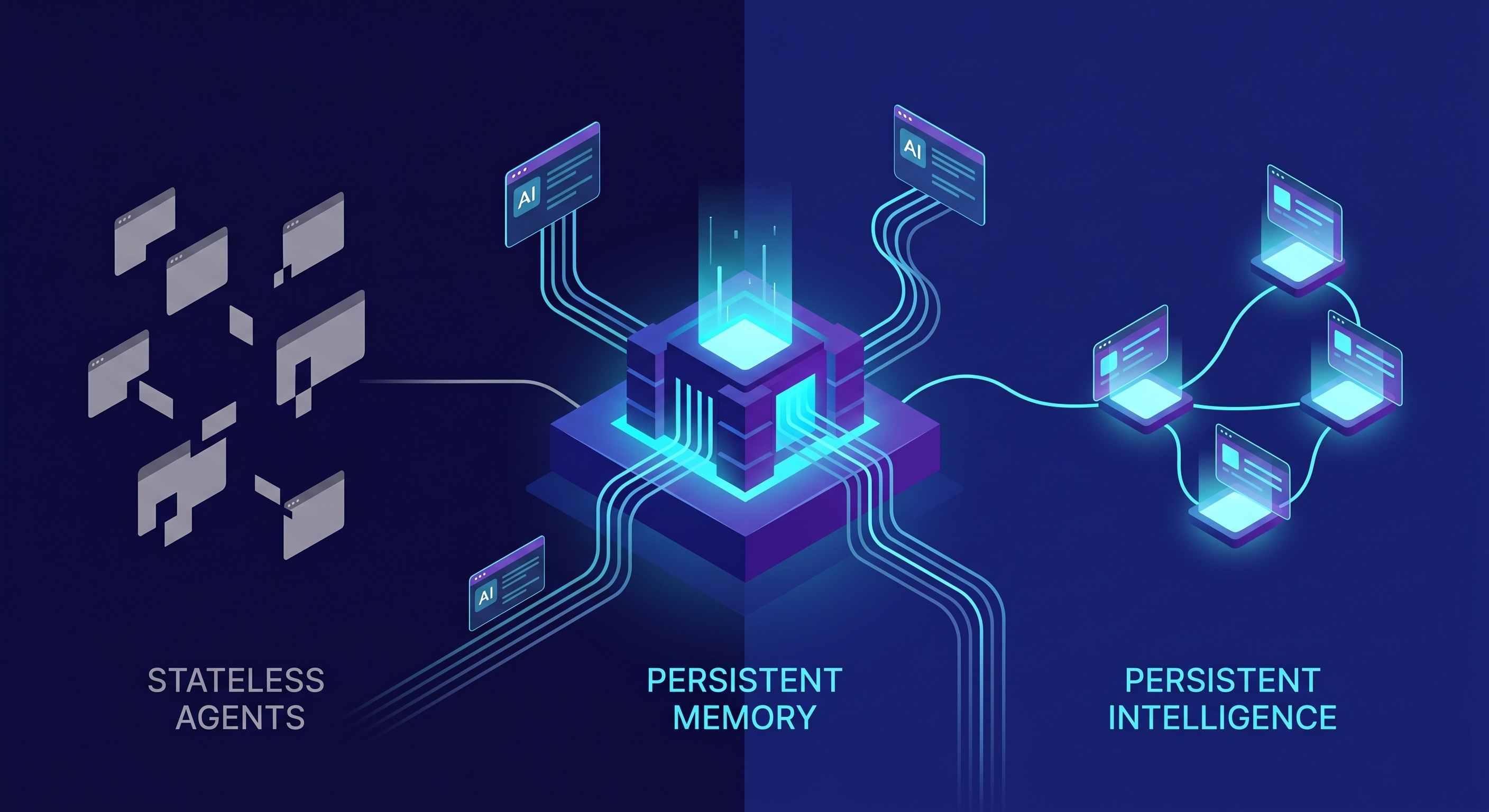
By 2028, Gartner predicts the average global Fortune 500 enterprise will have more than 150,000 AI agents in use, up from fewer than 15 in 2025.
That is an extraordinary increase.
But the bigger issue is not how many agents enterprises deploy.
It is what happens when thousands of independently intelligent systems begin acting across the same enterprise.
AI is rapidly moving beyond generating content and answering questions. Agents can access data, invoke tools, interact with applications, execute workflows, and increasingly make decisions and take actions.
This changes the enterprise AI challenge.
The question is no longer simply whether organizations can build intelligent agents.
The question is whether those agents can operate as part of an intelligent enterprise.

Enterprise technology has been through this before.
Organizations spent decades adding applications to solve individual business problems.
CRM improved customer management. Marketing platforms improved engagement. Commerce platforms managed transactions. Service platforms managed support. Analytics platforms created insight.
Each application added capability.
Collectively, they also created fragmentation.
Data became distributed. Customer understanding became inconsistent. Business logic became embedded in different systems. Integrations multiplied.
AI agents could recreate this problem at dramatically greater speed.
Marketing may deploy agents.
Sales may deploy agents.
Customer service, finance, commerce, operations, and IT may deploy their own.Each may operate with different data, permissions, context, memory, business rules, and AI models.
But there is one fundamental difference between application sprawl and agent sprawl.
Applications primarily store, process, and present information.
Agents can act on it.
That makes fragmentation more than an integration problem.
It becomes an intelligence problem.

Imagine several agents interacting with the same customer.
One understands transaction history. Another understands marketing engagement. Another sees service interactions. Another understands commerce behavior.
The marketing agent sees high engagement and sends a promotional offer. The commerce agent sees a recent purchase and would have suppressed it. The service agent knows the customer has an unresolved complaint and would have prevented the promotion altogether.
Each agent is acting reasonably based on what it knows. The customer still receives the wrong message.
The problem is not necessarily the intelligence of the individual agents. The problem is the absence of a shared understanding from which they operate.
Every agent can be intelligent while the enterprise itself remains fragmented.
This is one of the central architectural challenges of agentic AI.
Adding intelligence to individual applications does not automatically create intelligence across the organization.
In fact, without a common foundation, AI can accelerate the fragmentation enterprises have spent decades trying to overcome.

Agents need more than access to an AI model.
They need context.
They need to know who or what they are interacting with.
They need permissions governing what they can access and what they can do.
They need memory of what has already occurred.They need business rules and organizational knowledge.
They need mechanisms for executing decisions.
And enterprises need visibility into what agents knew, what they decided, what resources they accessed, and what actions they took.
These requirements point toward a different architectural model.
Identity, context, memory, permissions, governance, observability, and execution cannot be reinvented independently inside thousands of agents.
They need to become infrastructure.

Previous generations of enterprise architecture created foundational layers for different technological eras.
Systems of Record established trusted operational data.
Systems of Engagement connected organizations with customers and employees.
Cloud infrastructure created a scalable foundation for applications.
The agentic era creates another requirement:
Enterprise Intelligence Infrastructure.
Enterprise Intelligence Infrastructure provides a persistent layer through which data, business knowledge, customer understanding, AI models, agents, permissions, memory, and execution can operate as a coordinated capability.
The distinction matters.
Applications can change.
Models can change.
Agents can change.
Enterprise intelligence should not have to start over when they do.
Customer understanding should persist.
Business context should persist.
Memory should persist.
Governance should persist.The intelligence accumulated by the organization should become an enterprise asset rather than remain embedded inside whichever application or AI model happens to be operating today.
The first phase of enterprise AI focused on capability.
Which model is best?
Which company has the most powerful agent?
Which application can add AI fastest?
Those questions will continue to matter.
But as access to powerful models and agents becomes more widespread, another source of advantage emerges: the intelligence infrastructure surrounding them.
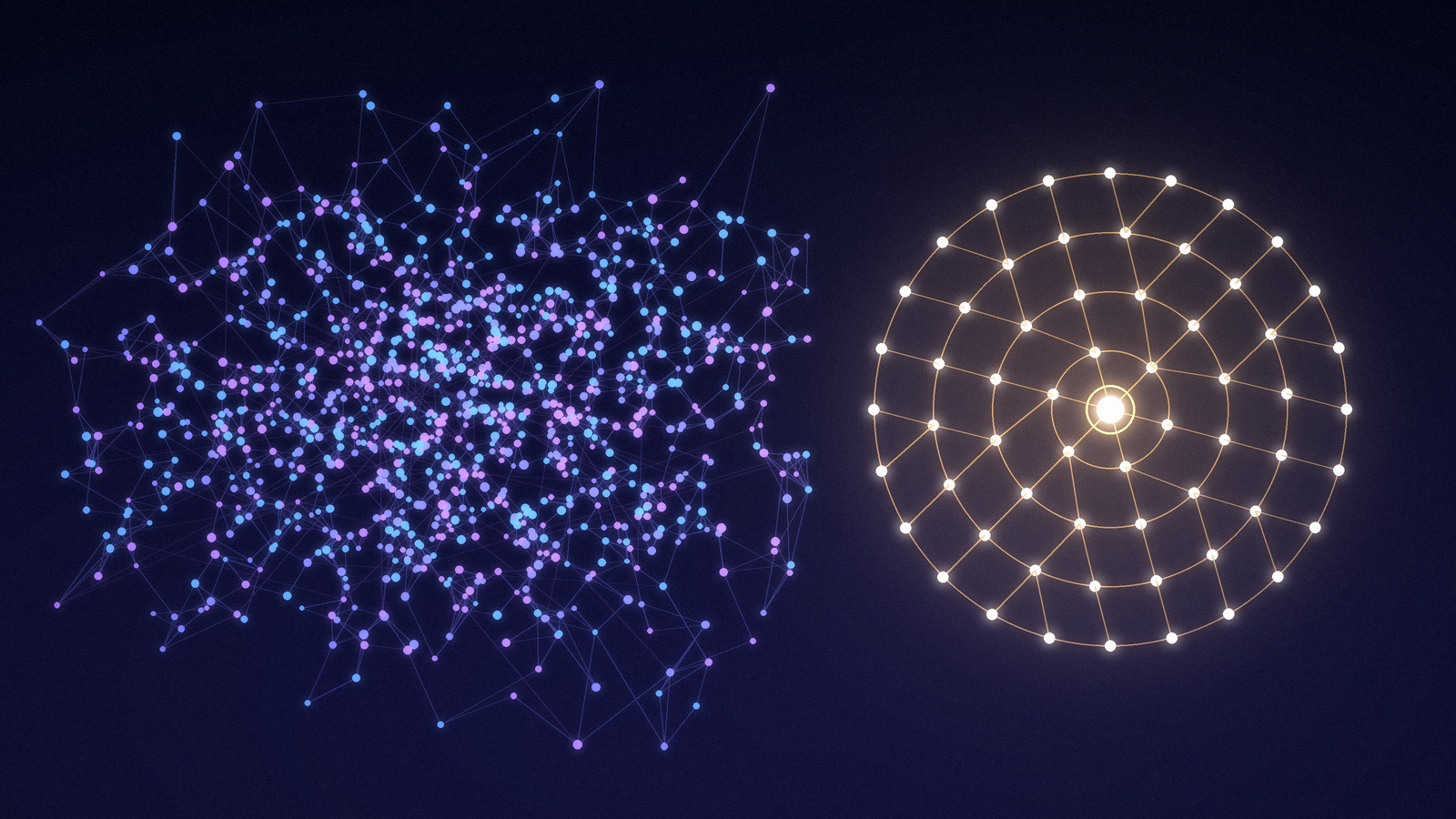
An organization with 10,000 disconnected agents may not be more intelligent than an organization with 1,000 coordinated ones.
The competitive advantage will not necessarily come from deploying the most AI.
It may come from creating the strongest foundation from which AI operates.
A foundation where new models can connect without rebuilding organizational knowledge.
Where new agents can inherit trusted context.
Where permissions and governance follow intelligence across applications.
Where decisions can be observed and audited.
And where understanding compounds as the organization learns.

HELIOS was designed around a simple architectural principle:
Intelligence should be infrastructure.
Its AI-native architecture provides a foundation for connecting data, customer understanding, AI capabilities, permissions, memory, workflows, observability, and governed execution across applications and emerging agentic systems.
HELIOS does not depend on a single application, agent, or AI model.
Those technologies will continue to evolve.The intelligence connecting them should endure.
Because the defining challenge of the agentic enterprise will not be creating more intelligent agents.
It will be creating an enterprise intelligent enough to coordinate them.
HELIOS is AI-native Enterprise Intelligence Infrastructure for organizations building intelligence across data, applications, AI models, and agentic systems.